
Teaching Geometric Proof with Tech: Pitfalls and Possibilities



Abstract
Geometric proof is a foundational yet challenging topic in mathematics,
requiring students to integrate visual, logical, and notational skills. While
technology has enhanced learning in other mathematical domains, its impact on
geometric proof remains limited. To investigate this gap, we interviewed 18
geometry teachers to establish the technical requirements of educational proof
tools. These requirements inform our review of 33 commercial and research tools.
Our findings reveal a critical mismatch: while teachers value certain digital
tools for initial planning and exploration activities, they revert to
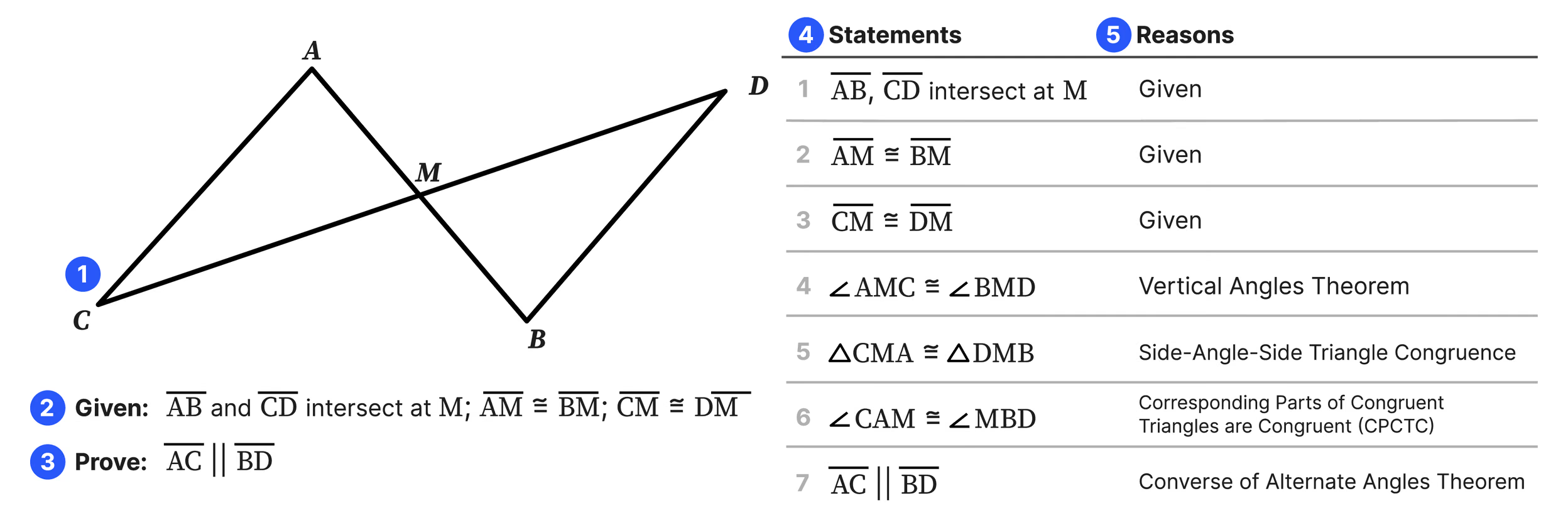
pen-and-paper for formal proof because it supports diagram annotation and
provides space for multiple approaches to proof-solving. Annotating the diagram
is a key component of the proof-solving workflow that existing tools do not
support. We propose four technical and human-centered design guidelines for
educational proof tools to meet teacher needs at scale: integrating diagram and
proof, generating problems and feedback automatically, supporting multiple
proof formats, and reducing accidental complexity in the user experience.